Introducing Quine: An AI research system designed for the complexity of biology
1mo
- Published
- Collected
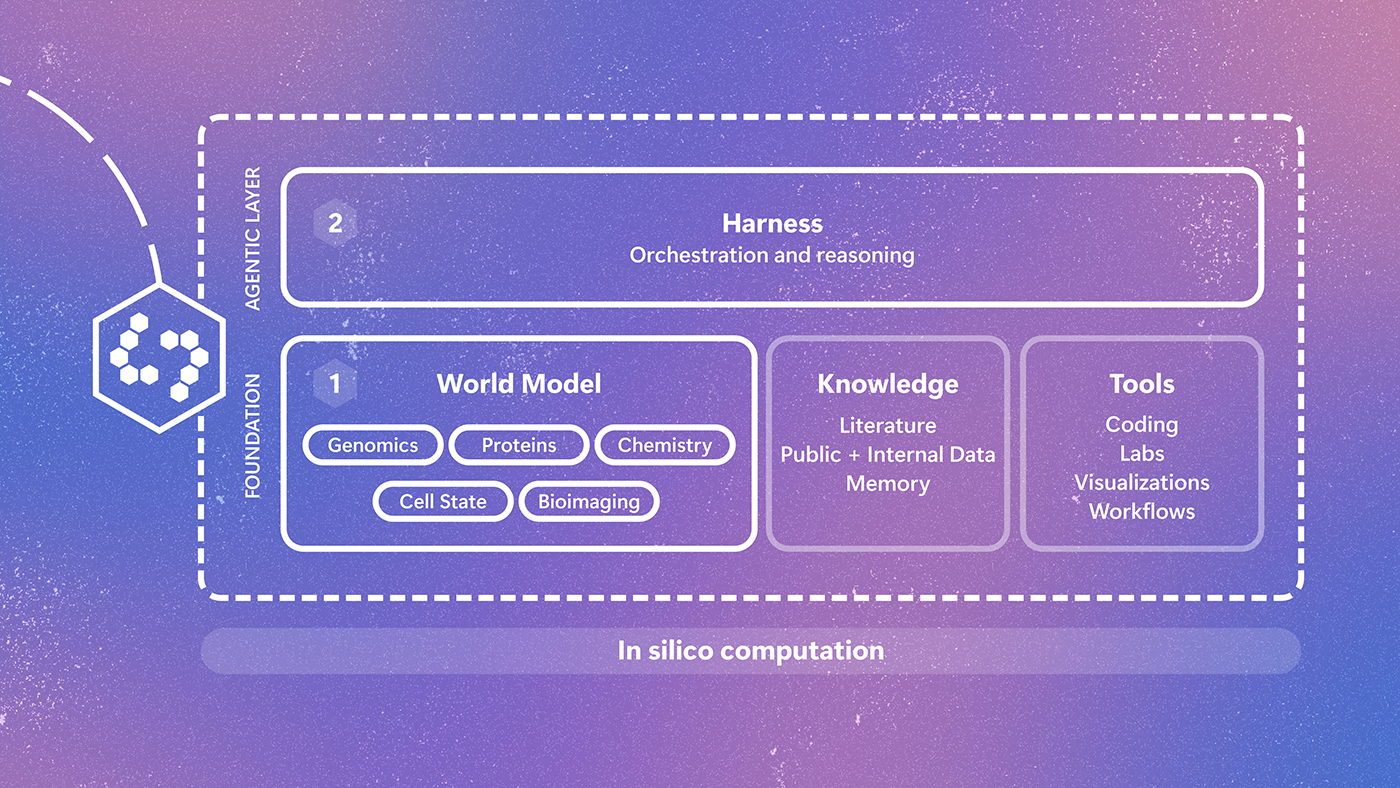
Biology doesn't operate in silos, and neither should the AI representation of it. Quine is an early-stage research effort to create a multimodal world model of biology. By connecting insights across biological scales and modalities, Quine helps scientists computationally search a space far larger than intuition allows and prioritize hypotheses before they reach the lab. Experimental results provide important feedback…
At a glance Quine (opens in new tab) is a research effort to create a multimodal world model of biology and an interactive harness connecting models, scientific tools, literature, and researchers. In collaboration with researchers at the Broad Institute of Harvard and MIT, we have used this system to prioritize compounds predicted to drive therapeutic tumor-state shifts and validated several top-ranked candidates across multiple wet-lab assays. The Quine Fellows program (opens in new tab) will…
overfeed.news indexes and links. We publish a short excerpt — the full article stays at Microsoft Research.
More from Microsoft Research
Log in to follow this source
Microsoft Research Focus – Edition #97
Host Sowbhagya Suresh shares some of the latest news and cutting-edge research from across Microsoft—from understanding the challenges facing coding agents to uncovering how people use AI at work and improving extended-range weather forecasting. The post Microsoft Research Focus – Edition #97 appeared first on Microsoft Research .
Flint-interactive: A language for creating interactive data visualizations
Flint-interactive gives AI agents a language for creating interactive visualizations. Click a chart, filter data, highlight related content, and explore beyond the view the author originally chose. The post Flint-interactive: A language for creating interactive data visualizations appeared first on Microsoft Research .
Solving a 31-year-old grand challenge in mathematics – the KLS conjecture
For decades, a fundamental question about the difficulty of computing in high-dimensional spaces has resisted proof. New research resolves this question, removing a major theoretical obstacle to understanding the efficiency of randomized algorithms used across science and computing. The Kannan–Lovász–Simonovits (KLS) conjecture was proposed in 1995. It asks whether, for a broad class of high-dimensional […] The post Solving a…
Called to serve: Tech, research, and positive impact
Lab Director Chris White has worked on research challenges with real-world implications—from new approaches to wartime data analysis to tools for combating human trafficking. He talks to program manager Weishung Liu about the influences that led to the work and more. The post Called to serve: Tech, research, and positive impact appeared first on Microsoft Research .