Did the user ask for this? Securing AI agents against intent hijacking with Semantic governance policies
19h
- Recolectado
Más de Google Developers Blog
Inicia sesión para seguir esta fuente
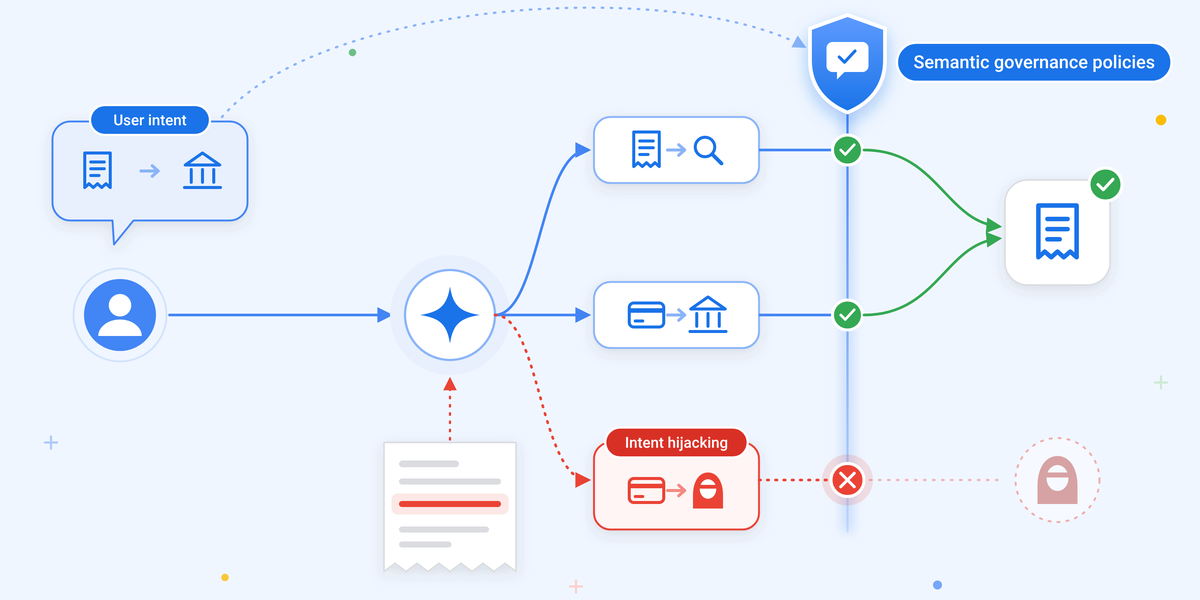
Check what your AI agents do before they do it, with Semantic governance policies
Semantic governance policies enable developers to govern AI agents by evaluating every proposed tool call inline before execution. Operating via Agent Gateway, the policy engine checks each action against user intent and plain-language rules to prevent unauthorized data sharing and prompt injection attacks. Developers can easily attach natural-language constraints to their agents and monitor auditable verdicts through Cloud Logging.
How to securely connect internal Cloud Run MCP servers to Gemini Enterprise
How to connect Gemini Enterprise privately to internal StreamableHTTP MCP servers on Cloud Run using Egress Agent Gateway, Private Service Connect, FQDN-scoped Private Cloud DNS, and dual-header OAuth 2.0 authentication.
How to handle user, connector, and agent auth in Gemini Enterprise with a custom UI
When building a custom enterprise UI on top of Gemini Enterprise's :streamAssist API, developers must manually implement three core authentication layers. These include authenticating users or workloads via Google Identity or Workforce/Workload Identity Federation, managing third-party 3-legged OAuth (3LO) for Federated Connectors through the Keystore, and configuring on-demand per-tool OAuth for custom ADK agents using Vertex AI Agent Engine and…
Agent Anomaly Detection: Safeguarding agents across other clouds
Agent Anomaly Detection now monitors ADK agents running across AWS, Azure, or on-premises by analyzing their traces and logs in your Google Cloud project. By ingesting OpenTelemetry-formatted data through the Telemetry API, it evaluates full conversations for behavioral drift without needing access to the agent's underlying runtime. This enables security teams to detect risks like rogue behaviors, tool misuse, and…