Your Amazon Bedrock inference bill can keep climbing even after you tune prompts and application logic. Four request-level choices (cache duration, service tier, reasoning effort, and maxTokens) change how many tokens the service processes and the rate applied. We show how we tested each and how to verify the effect.
Google DeepMind's Gemini 4 Carbon is now listed on OpenRouter, priced at $2 per million input tokens and $10 per million output tokens, with a batch variant at $1 per million input tokens and $5 per million output tokens.
The L4 GPU price on runpod increased by 91.7% to $0.59 per hour, the largest daily increase among tracked chips, while the A100 SXM4 on vast.ai rose 27.6% to $0.8022 per hour. The market tracked 96 chips across 221 listings from runpod and vast.ai as of November 12, 2026.
La forma más barata de alquilar cada cantidad de VRAM ahora mismo. Ordenado por memoria, no por precio: no eliges una GPU por barata, eliges la más barata en la que cabe tu modelo.
Los nombres de los proveedores son enlaces de referido: si te registras a través de uno, RunPod o Vast.ai nos paga una pequeña comisión. Eso nunca cambia el precio que pagas ni cuál listamos como el más barato. Cómo gana dinero el sitio
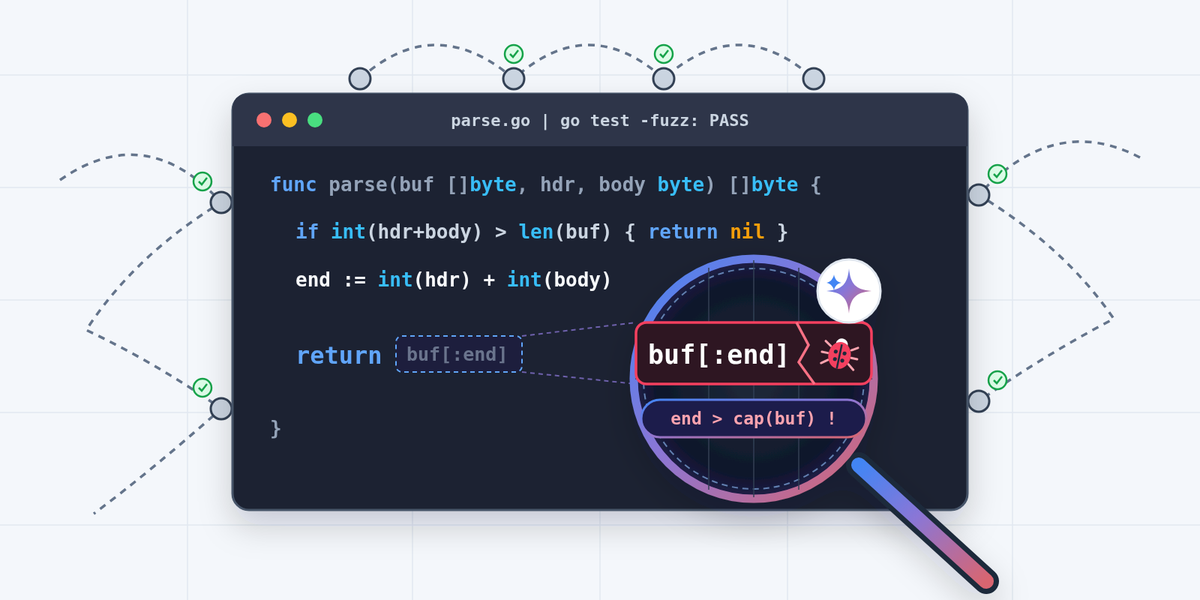
How pairing Go's surviving compiler bounds-check traps with Gemini 4 Argon and the Z3 constraint solver catches latent out-of-bounds panics in Go code and uncovers a slice-capacity blind spot in go test -fuzz.
Built primarily on OpenAI models, Amplitude’s proactive product agent, Wave, identifies what to build, helps teams ship changes with coding agents, and measures the impact.
Agent Anomaly Detection (AAD) provides asynchronous, low-latency monitoring for AI agents by analyzing OpenTelemetry traces and logs to flag goal hijacks and tool misuse. Tested across five public security benchmarks, AAD successfully caught 87% of harmful instructions carried out by agents without adding runtime latency. Developers can integrate AAD alongside semantic governance and strict tool limits as part of a…
Foundation models pretrained on large natural-image collections are increasingly adapted for medical image segmentation, in the expectation that they will replace models trained for each task. Most comparisons, however, use data from the training distribution and a single task-specific baseline whose configuration is rarely justified, and therefore provide limited evidence of performance at new clinical sites. It also remains unclear how much of a foundation model must be adapted, and what determines this. We adapted a foundation model, DINOv2, with strategies ranging from tuning only its bias terms to full fine-tuning, and compared it with U-Nets and ResU-Nets trained from scratch. Experiments covered colonoscopy, breast ultrasound and dermoscopy, with testing on held-out data from the training source and on independent datasets from other institutions. The adapted foundation model generalised better on every external dataset. Within the training distribution, the task-specific models remained competitive when training data were abundant, and delineated boundaries more precisely, while the foundation model more often missed small lesions. Only a small fraction of the foundation model required adaptation, and the capacity needed was determined by the imaging domain rather than by the adaptation method. A widely used polyp test set was also found to duplicate images from another benchmark. Foundation-model adaptation is therefore warranted where models must work across sites, with capacity selected on the target domain.
DeepLearning (DL)-based Computer-Aided Diagnostic (CAD) systems have shown great promise in supporting clinicians, but their performance heavily depends on the availability of large, well-annotated datasets. In medical lesion detection, the scarcity of comprehensive, stan dardized annotations and the heterogeneity of existing datasets limit the development of robust foundation models. In this work, we introduce a novel approach to building a multi-domain foundation model for le sion detection by integrating diverse medical image datasets annotated for both anatomical structures and abnormalities. We first propose a student-teacher training strategy to effectively combine datasets with heterogeneous label spaces, mitigating catastrophic forgetting, and im proving feature learning. In addition, building on our previously pro posed example-based EM-DETR framework, we adapt it to jointly learn from multiple domain-specific datasets, enabling fine-grained, example driven detection across modalities. Our model achieves state-of-the-art (SOTA) results, with image-level AUC scores exceeding previous SOTA by 1% point on four key findings in CXRs. We achieve a leading mAP50 in CXRs and mammography, surpassing EM-DETR trained on a single dataset by 2-3% points. This approach paves the way for scalable foundation models in medical imaging that leverage heterogeneous data while maintaining robust and generalizable performance.
We present TorchCurves, a PyTorch library that treats vector-valued parametric curves as learnable primitives. Its central operation maps batches of scalar inputs to points on curves represented in B-spline or Legendre polynomial bases, with differentiation through both inputs and coefficients. Curve coefficients can be optimized jointly with the surrounding model or produced by another network. The library provides trainable modules, reusable basis modules, and a functional interface, supporting applications ranging from continuous feature embeddings to Kolmogorov-Arnold networks and functional regression. Its implementation combines classical evaluation algorithms with vectorized PyTorch operations, emphasizing readability and maintainability without custom hardware kernels. Timing experiments compare curve evaluation against NumPy and SciPy and KAN training against EfficientKAN across a range of problem sizes. The results illustrate where this generality remains computationally practical and where overhead is substantial. Library is available on GitHub at https://github.com/alexshtf/torchcurves.
Reinforcement learning with verifiable rewards (RLVR) produces rich training experience, yet outcome rewards reduce each attempt to a single number and leave most of this information unused. Training-time scaffolds, such as strategies or hints added to the prompt during training, offer a natural way to turn this information into guidance, but their design and adaptation are largely left to humans and tailored to specific domains. We introduce AutoScaffold, a unified AI-for-AI framework that turns a student's training experience into adaptive scaffolds, with minimal domain-specific information and no human intervention during training. A frozen teacher periodically examines this experience, diagnoses bottlenecks, and designs scaffolds in two forms: (i) strategies shared across a class of tasks and (ii) hints for individual hard tasks, adjusting the content and amount of support as the student learns. The scaffolds are removed at evaluation. We apply the same framework to ALFWorld, search-based QA, mathematical reasoning, and GPU kernel generation. When evaluated without scaffolds, students trained with AutoScaffold outperform those trained with the corresponding RL baselines in all four domains, with gains of 7.2 points in ALFWorld success and 4.0 points in average QA exact match. On GPU kernel generation, AutoScaffold increases the fraction of tasks with a correct kernel that runs faster than the PyTorch reference by up to 5.0 points. On math, our student surpasses QuestA's reported accuracy using approximately one-third as many student training steps. Analyses show that the teacher identifies a different failure in each task class and shifts its scaffolds from step-by-step workflows to targeted fixes as the student improves, and that its revised scaffolds help the student learn more than keeping the previous scaffold or using no scaffold.
LLM agents are increasingly used for open-ended, data-driven scientific discovery, yet most of them evaluate hypotheses pointwise, testing an empirical claim h only against its complement h. When evidence rejects h, the agent learns that one explanation is unlikely but not which alternative the evidence supports. To recover that alternative, we introduce Contrastive Discovery, which replaces the single hypothesis with a contrast set, a scientific question paired with mutually exclusive and collectively exhaustive competing explanations. Each experiment is scored by how its evidence redistributes belief across the set, and the question is resolved when belief concentrates on one explanation. Because contrast sets change only the unit an agent proposes and scores, an existing agent can use them to re-evaluate evidence it has already collected or to guide its search. Across six domains, 89\% of the pointwise candidates with the largest belief shifts are rejections. On the same evidence, contrast sets resolve 73\% of these candidates to a specific alternative. When contrast sets guide search, the agent resolves 67\% more questions than pointwise surprisal under the same experiment budget. In a blinded study, 38 human experts chose the same explanation on 78\% of resolved questions and on 82\% of questions where the pointwise agent rejected its hypothesis and stopped. Together, these results support explicit competing explanations as a way for discovery agents to resolve more scientific questions from the same evidence and validation budget.